 Request a Quote →
Cable Tray Accessories
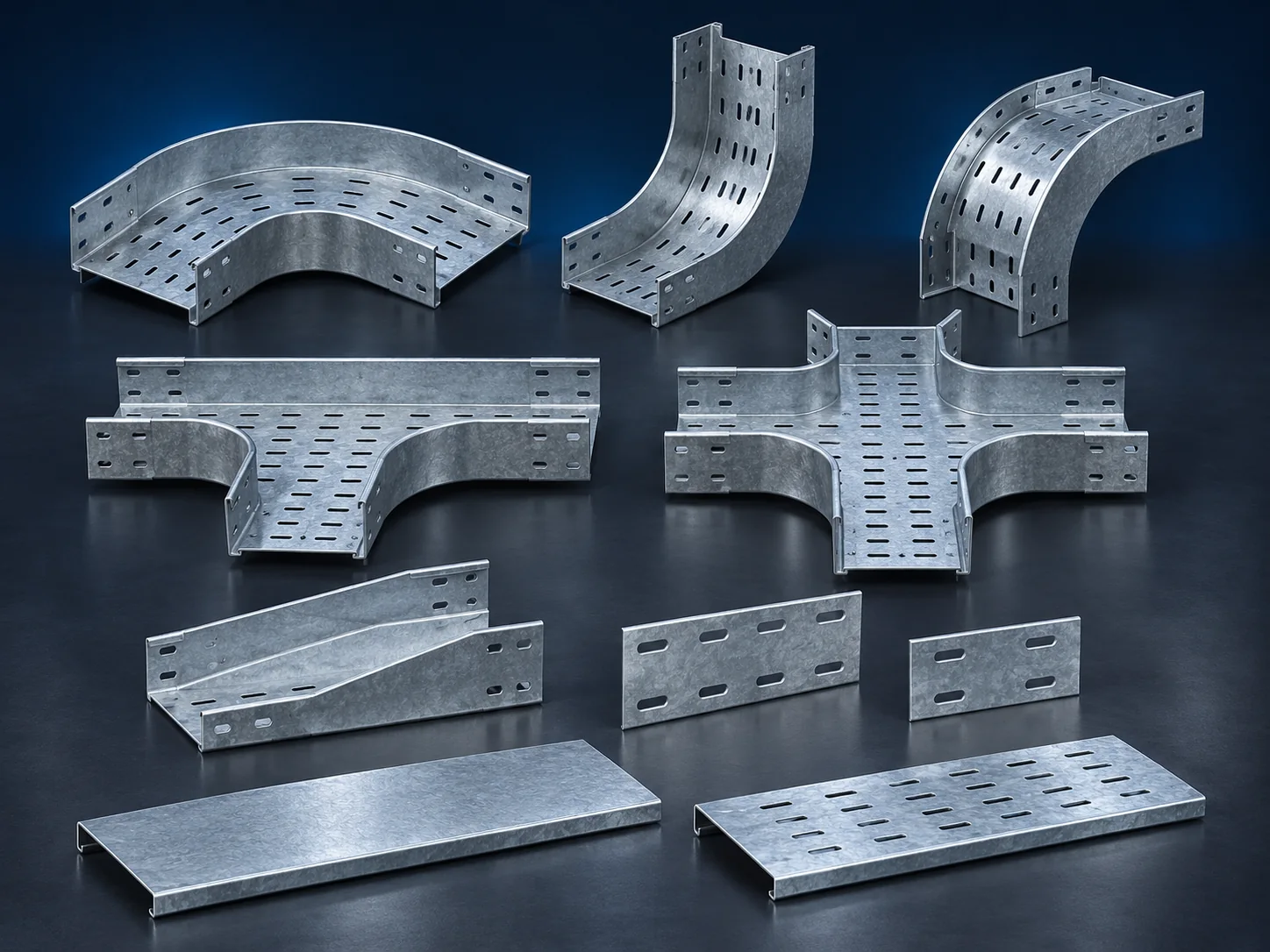
Bends, tees, crosses, reducers, covers, dividers and couplers for complete cable-tray routes.
What it does and
why it is used.
Cable tray accessories maintain route continuity through direction changes, branches, level transitions and size reductions. Each fitting is coordinated with the parent tray width, side height, material, finish and installation geometry.
Completes cable tray routing without improvised site fabrication, helping preserve cable bend radius, alignment, support and finish continuity.
Planning a cable route? Use our cable tray selection guide to compare tray construction, loading, ventilation, support span, material and finish before requesting a technical proposal.
- Horizontal bends
- Inside and outside vertical bends
- Tees and crosses
- Reducers and offsets
- Covers and dividers
- Couplers and fixing hardware
- Route direction changes
- Branch connections
- Level transitions
- Tray-size reductions
Engineering reference.
Indicative capability for initial product selection. Final ratings, dimensions, materials, protection, component makes and construction are confirmed against the approved SLD, BOQ, drawings, load data and site conditions.
Built for real-world
electrical infrastructure.
Key use cases
- Horizontal route changes
- Vertical rises and drops
- Three-way and four-way branches
- Width transitions
- Covered cable routes
- Power and data segregation
Typical installation areas
- Electrical and plant rooms
- Commercial service areas
- Factories
- Data centres
- Infrastructure projects
- Utility corridors
For an accurate technical proposal
Share the SLD, BOQ, load schedule, fault level, cable schedule, approved makes and layout drawings. Our engineering team will review the requirement and propose the appropriate configuration.
Project planning
Questions before
you request a quote.
Final construction and ratings are confirmed against approved project documents, installation conditions and the required operating philosophy.
01Which cable tray accessories are normally required?+
Typical accessories include horizontal bends, inside and outside vertical bends, tees, crosses, reducers, offsets, covers, dividers, couplers and fixing hardware.
02Must accessories match the parent tray?+
Accessories should be coordinated with the tray type, width, side height, material and finish to maintain route continuity and compatible connections.
03How is bend radius selected?+
Bend radius is selected according to cable type, manufacturer guidance, installation access and the approved routing requirement.
04Can custom accessories be fabricated?+
Yes. Project-specific dimensions and route transitions can be fabricated against approved drawings and verified site requirements.
Start a conversation
Have a project in mind?
Let's engineer it right.
Share your SLD, BOQ or project requirement. Our team will respond with the right technical direction.